How Our R&D Team Is Using AI To Transform Drug Discovery
Takeda is transforming how medicines are discovered, developed and delivered by embedding AI, advanced data platforms and lab automation directly into the heart of R&D. Built on more than 240 years of scientific heritage, our R&D engine connects computational science, wet lab innovation and product thinking to unlock new biology, design the next ground-breaking medicines and accelerate patient impact.
Across neuroscience, oncology and gastrointestinal and inflammation research, Takeda scientists and technologists are deeply integrating their expertise to design smarter experiments, shorten learning cycles and deliver clearer evidence earlier in development.
Learn about Takeda’s Labs of Tomorrow and the people driving this work forward.
A Tech-Enabled R&D Engine Built for the Labs of Tomorrow
Drug discovery is complex, data intensive and filled with uncertainty. Takeda’s AI‑enabled Lab of Tomorrow model integrates digital capabilities end-to-end across R&D to improve both speed and probability of success.
Rather than treating AI and automation as add-ons, Takeda embeds them into daily workflows:
- Computational and in silico science integrated with wet lab experimentation
- AI and machine learning models that prioritize hypotheses and guide molecular design
- High-throughput automated labs that generate high‑quality data at scale
- Product-driven decision making focused on advancing molecules to the clinic
The result is a closed loop discovery engine where data from every experiment informs the next decision.
Inside the Work—and the People Behind it
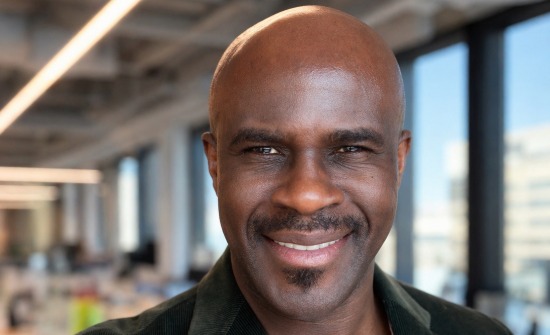
Why AI and Computational Science Matter
For Yves Fomekong Nanfack, Head of AI/ML Research, AI is a catalyst for better science.
“The best outcomes happen when computational and experimental scientists are working together from day one. AI gives scientists the ability to explore more hypotheses and focus experiments where they matter most," shares Yves.
Yves’ team develops foundational and agentic AI models that mathematically represent biology and chemistry. These models help Takeda teams:
- Explore vast hypothesis spaces that cannot be tested manually
- Screen and design small molecules and biologics with greater precision
- Reduce experimental burden while improving molecule quality and safety
Here, AI success is measured by impact, not metrics.
“We do not optimize for model accuracy. We optimize for getting molecules into the clinic and to patients,” explains Yves.
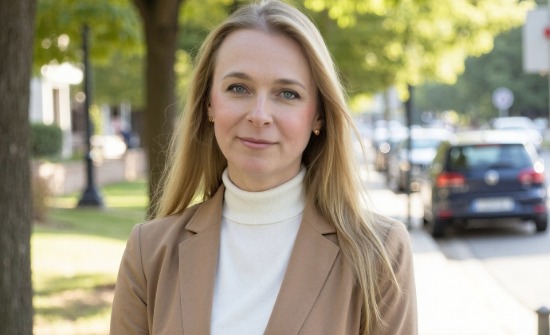
Turning Human Data Into Decision
In neuroscience, AI supports earlier and more confident decisions across discovery and development. Daria Prilutsky, Director of Computational Biology and Neuroscience Lead, manages a global team that works end to end across the pipeline.
Her team integrates genetics, biomarkers, multi-omics data, functional data and scientific literature to inform:
- Target identification and prioritization
- Disease and pathway relevance
- Biomarker strategy and patient segmentation
According to Daria, what use to take months or more can now be done in weeks. As new data comes in, her team can iterate and compare biological hypotheses systematically. This reduction in uncertainty upstream means improved outcomes downstream.
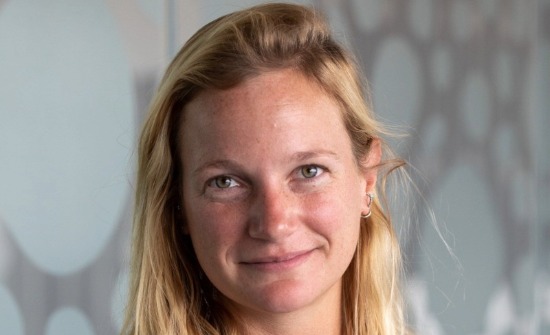
Where Wet Labs and AI Converge
Automation plays a critical role in how data is generated earlier in development. Hilary Ranson, Associate Director of High-Throughput Mass Spectrometry, leads work that helps teams access higher quality data sooner.
Her wet lab work enables scientists to:
- Screen more compounds earlier in development
- Generate richer in vitro data to inform later in vivo studies
- Identify false positives and liabilities sooner
She shares, “The earlier we get high-quality data, the better we can predict what will happen downstream.”
That data feeds directly into computational models, strengthening the connection between experiment and prediction.
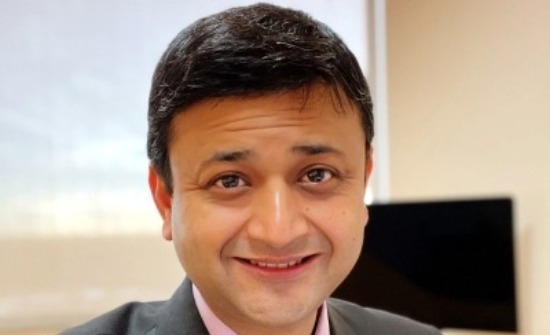
Cellular Lead Profiling and Closed-Loop Discovery
Cellular lead profiling sits at a key decision point in the discovery process. In this space, Sangram Parelkar, Associate Director and Head of Cellular Lead Profiling, focuses on integrating automation, biology and analytics.
His teams run automated cellular assays at scale and pair them with real-time data analysis to inform go or no-go decisions.
“Labs of Tomorrow is about closed‑loop systems,” he explains. “Data from one cycle directly shapes the next. We are making smarter decisions with higher confidence.”
By reducing Design‑Make‑Test‑Analyze cycle time, Takeda improves both productivity and molecule quality.
Heritage Enables Innovation
Takeda’s Lab of Tomorrow builds on deep scientific heritage while embracing bold innovation. By integrating AI, data and automation into R&D, Takeda is changing how decisions are made, how risks are managed and how quickly medicines reach patients.
If you want to work where AI in drug discovery meets real-world patient impact, explore careers in Takeda Research and Development.
Related Content


Ready to join #TeamTakeda?
Get AlertsJoin our talent community.
Sign UpJobs for you
You have not viewed any jobs yet.
You have not saved any jobs yet.